

The 10 Best Places to Visit in India for 2026
If you’ve been scrolling through Instagram or TikTok lately, you’ve probably noticed that India is having a major “moment” in the travel world. But here’s the thing: India isn’t just a country you “visit.” It’s a country you experience. It’s a sensory explosion of spices, colors, chaotic traffic, and profound silence.
As a travel strategist who has spent a significant amount of time navigating the subcontinent, I can tell you that the “Best of India” list has changed. In 2026, travelers are moving away from the “checklist” tourism of the past and leaning into slow travel, spiritual retreats, and eco-conscious adventures.
Whether you’re a first-timer or a returning soul, here are the top 10 best places to visit in India right now.
1. Varanasi: The Spiritual Heart of India

You haven’t seen India until you’ve stood on the banks of the Ganges at sunrise. Varanasi is one of the oldest continually inhabited cities in the world, and it feels like it. It’s raw, it’s intense, and it’s deeply spiritual.
-
Why go in 2026: The recent “Kashi Vishwanath Corridor” project has made the city much more accessible for pedestrians while preserving its ancient charm.
-
Pro Tip: Don’t just watch the evening Ganga Aarti from the steps. Hire a boat and watch it from the water—the perspective is life-changing.
2. Ladakh: The “Cold Desert” Frontier

If you want to feel like you’re on another planet, head north to Ladakh. Nestled between the Kunlun Mountains and the Himalayas, this high-altitude region is a land of turquoise lakes, jagged peaks, and Tibetan Buddhist monasteries.
-
The Vibe: Adventure meets Zen.
-
Don’t Miss: Pangong Tso Lake (yes, the one from the movies) and a motorbike ride over Khardung La, one of the highest motorable passes in the world.
-
Travel Alert: Ladakh is pushing for sustainable “Low Impact” tourism in 2026. Be prepared to travel responsibly and minimize plastic use.
3. Udaipur: The Most Romantic City in India

Often called the “Venice of the East,” Udaipur is built around a series of artificial lakes and is home to some of the most opulent palaces on earth. If you’re looking for luxury and “Old World” royalty, this is your spot.
-
Best for: Couples and history buffs.
-
Top Experience: A sunset boat ride on Lake Pichola with a view of the Lake Palace—a white marble marvel that seems to float on the water.
4. Kerala Backwaters: The Ultimate Slow Travel

If the chaos of Delhi or Mumbai gets to be too much, the backwaters of Kerala (specifically Alleppey and Kumarakom) are the perfect antidote. Spend a few nights on a Kettuvallam (a traditional houseboat) as you glide through palm-fringed canals.
-
The Food: Kerala’s cuisine is legendary—expect fresh fish (Karimeen) cooked in banana leaves and plenty of coconut-infused curries.
-
2026 Trend: Look for “Homestay” houseboats where you can learn traditional fishing techniques from local families.
5. Hampi: A UNESCO Bouldering Paradise

Hampi is essentially a giant open-air museum. The ruins of the Vijayanagara Empire are scattered across a landscape of massive granite boulders and lush rice paddies. It’s a place that feels stuck in time.
-
Why it’s high-growth: Hampi has become a hotspot for “Digital Nomads” in 2026 who want a mix of history and a laid-back lifestyle.
-
Insider Tip: Cross the river to “Hippie Island” (Virupapur Gaddi) for a more relaxed, backpacker-friendly atmosphere.
6. Agra: More Than Just the Taj

Yes, the Taj Mahal is here, and yes, it is worth the hype. No matter how many photos you’ve seen, seeing the sun hit that white marble at 6:00 AM is a bucket-list moment.
-
Expert SEO Tip: If you’re planning your trip, search for “Taj Mahal sunrise tickets” at least two weeks in advance. The 2026 visitor caps are stricter than ever to preserve the monument.
-
Beyond the Taj: Don’t skip Agra Fort or the “Baby Taj” (Itmad-ud-Daula), which many locals argue is even more intricate than the big one.
7. Rishikesh: The Yoga Capital of the World

Located in the foothills of the Himalayas, where the Ganges runs crystal clear, Rishikesh is the place to go for spiritual seeking and adrenaline-pumping white-water rafting.
-
The Beatle Connection: Visit the “Beatles Ashram” where the Fab Four wrote much of the White Album.
-
Modern Twist: In 2026, Rishikesh has evolved into a premier destination for “Bio-hacking” retreats, combining ancient Yoga with modern wellness tech.
8. Meghalaya: The Abode of Clouds

Tucked away in Northeast India, Meghalaya is home to the “Living Root Bridges”—natural bridges grown from the roots of ancient rubber trees. It is one of the wettest, greenest, and most beautiful places on the planet.
-
Best for: Trekkers and nature lovers.
-
Highlight: The village of Mawlynnong, which has held the title of the “Cleanest Village in Asia” for years.
9. Jaipur: The Pink City

Jaipur is the gateway to the desert state of Rajasthan. It’s a city of forts, gems, and incredible textiles. From the Hawa Mahal (Palace of Winds) to the massive Amer Fort, the architecture here is staggering.
-
Shopping: This is the place to buy authentic block-print fabrics and semi-precious jewelry.
-
New in 2026: The night tourism at Amer Fort has been upgraded with immersive light and sound shows that tell the history of the Rajput kings.
10. Gokarna: The Chill Alternative to Goa

Goa is great, but it’s crowded. If you want the pristine beaches and the “bohemian” vibe without the massive crowds, head a bit further south to Gokarna. It’s a temple town with some of the most secluded beaches in India, like Half Moon Beach and Paradise Beach.
-
The Vibe: Peaceful, rustic, and spiritual.
-
Best Time to Visit: November to February.
How to Plan Your India Trip in 2026: Expert Tips
1. The Vande Bharat Evolution
Forget the old stories of slow, dusty trains. India’s new Vande Bharat Express trains are high-speed, air-conditioned, and connect almost all the major tourist hubs. It’s the best way to see the country comfortably.
2. Get an E-Visa Early
While the e-visa process is much smoother in 2026, don’t leave it until the last minute. Apply at least 30 days before your flight to avoid any “administrative” hiccups.
3. Embody the “Digital Rupee.”
India has gone almost entirely cashless for small transactions. Most street vendors use QR codes (UPI). While cash is still good to have, downloading a local-friendly payment app will make your life 10x easier.
4. Respect the Seasons
India is huge. When it’s snowing in Ladakh, it’s 90 degrees in Kerala.
-
Oct – March: Best for Rajasthan, Kerala, and the Golden Triangle.
-
June – Sept: Best for Ladakh and the mountains (avoid the plains during the monsoon unless you like being soaked).
The Bottom Line
India isn’t a destination you can “finish” in one trip. It’s a lifetime of exploration. If you’re looking for the best mix of culture, comfort, and “wow” moments in 2026, start with Varanasi for the soul, Jaipur for the history, and Kerala for the reset.
The world is getting smaller, but India remains as vast and mysterious as ever. Are you ready to go?
Read More
The Speed-to-Profit Era: 10 Best Low-Capital Business Ideas to Start Fast in 2026
If you’re still waiting for a “perfect time” or a massive bank loan to start your business, you’re playing by the 2010 rulebook. In 2026, the barrier to entry isn’t capital; it’s clarity. We are living in the “Speed-to-Profit” era, where the most successful founders aren’t the ones with the most funding, but the ones who can solve a specific problem using the digital tools already in their pockets.
The goal for 2026 is simple: High margins, low overhead, and fast execution.
As an SEO strategist who has watched the digital economy pivot toward automation and hyper-specialization, I’ve identified the 10 best business models that require almost zero upfront cash but offer massive scaling potential.
1. AI Workflow “Architect” for Small Businesses
Most local businesses (think law firms, dental clinics, or HVAC companies) know they should be using AI, but they are paralyzed by the options. They don’t need a complex SaaS; they need someone to spend four hours setting up their automated customer replies, appointment booking, and basic invoicing.
-
The Capital: $0. Just your time to learn tools like Zapier, Make, or ChatGPT’s custom GPTs.
-
The Profit: You can charge a $1,500 “Setup Fee” plus a small monthly maintenance retainer.
-
Why it works: You’re selling time, which is the most expensive commodity for a business owner.
2. Short-Form Video Content Multiplier
Long-form content is great for SEO, but short-form (Reels, TikToks, Shorts) is king for attention. Thousands of podcasters and YouTubers are sitting on a goldmine of raw footage they don’t have time to edit.
-
The Capital: A smartphone and a subscription to a tool like CapCut or Submagic.
-
The Move: Offer a “Package” where you take one 30-minute video and turn it into 10 viral clips.
-
Pro Tip: Don’t just edit; write the hooks. That’s where the real value lies.
3. The “Tradie” Virtual Assistant (VA)
Plumbers, electricians, and landscapers are often drowning in admin. They miss calls while on-site, which means they lose money. Unlike a general VA, a “Tradie VA” understands the specific software (like Jobber or Housecall Pro) and the urgency of lead response.
-
The Capital: A laptop and a reliable internet connection.
-
The Growth: Once you have three clients, you can hire a sub-contractor and turn this into a boutique agency.
4. User-Generated Content (UGC) for B2B
Everyone knows UGC for skincare and fashion. But in 2026, the “boring” industries—SaaS, Logistics, and Manufacturing—are desperate for human-centric content. They need real people talking about how their software works or why their supply chain is reliable.
-
The Capital: A decent phone camera and good lighting (natural sunlight is free).
-
The Pitch: Reach out to B2B companies on LinkedIn. They have higher budgets and lower competition than the crowded B2C space.
5. Niche Digital Product Studio (Notion & Canva)
Selling “templates” is old news. The new trend is building “Systems.” Instead of a “Daily Planner,” build a “Complete Operating System for Solo Real Estate Agents” in Notion.
-
The Capital: $0 (using free versions of design tools).
-
The Strategy: Pick a high-income niche (Real Estate, Crypto, Tech Recruiting) and build the one dashboard they can’t live without.
6. Local SEO & Google Business Profile Optimization
When was the last time a local restaurant updated its Google Business Profile? Probably 2022. Local SEO is the “low-hanging fruit” of digital marketing. By simply updating photos, responding to reviews, and optimizing for “near me” keywords, you can double a local business’s foot traffic.
-
The Capital: Your brain and a few SEO tools (many of which have free tiers).
-
The Revenue: A monthly management fee of
300–700 per client.
7. Bio-Hacking & Longevity Coaching
Wellness has moved beyond “losing weight.” In 2026, people are obsessed with biological age, sleep data, and glucose monitoring. If you’re a fitness nerd, you can consult people on how to interpret their Oura Ring or Whoop data.
-
The Capital: Personal expertise and a certification (optional but recommended).
-
The Move: High-ticket 1-on-1 coaching for executives who want to optimize their performance, not just their waistline.
8. Remote “Chief of Staff” for Solo Creators
Top-tier YouTubers and newsletter writers are now mid-sized companies. They need someone to manage their sponsorships, coordinate with editors, and keep their calendar sane. A “Chief of Staff” is a step above a VA—you’re a strategic partner.
-
The Capital: Organization skills and a Slack account.
-
The Income: These roles often pay
4,000–8,000 a month once you’re managing a significant creator’s business.
9. TikTok Live “Niche” Reselling
TikTok Live has become the new QVC. Whether it’s vintage sports cards, sustainable clothing, or refurbished tech, “Live Selling” allows you to build a community and move inventory instantly.
-
The Capital: Items from your own house or local thrift stores to start.
-
The Edge: It’s all about the “Vibe.” If you are entertaining, people will buy from you even if they can find the item elsewhere.
10. Sustainable Lifestyle Consultant
With carbon taxes and rising energy costs, homeowners are looking for ways to “green” their lives without spending $50k on solar panels. You can offer audits on home insulation, smart-home energy setups, and waste reduction.
-
The Capital: Knowledge of local tax credits and green tech.
-
The Payoff: You can charge for the audit and take a referral fee from the companies that do the installations.
How to Scale Your Low-Capital Business
The biggest mistake people make with “low-capital” ideas is staying small. Here is my “SEO Expert” advice for scaling these into a six-figure income:
-
Productize Your Service: Don’t just “do SEO.” Sell a “30-Day Google Growth Sprint.” Making it a “product” makes it easier to sell and easier to delegate.
-
Focus on “Lumpy Mail” or Direct Outreach: In 2026, the inbox is crowded. If you want a client, send them a personalized Loom video or a physical letter. It stands out in a world of AI-generated spam.
-
Own Your Audience: Don’t just rely on TikTok or LinkedIn. Start a simple email list (using a free tool like Beehiiv or Substack). If the platform changes its algorithm tomorrow, you still own your business.
The Bottom Line
The “Best” business idea is the one you can start this afternoon.
If you have a laptop, you have a global storefront. If you have a skill, you have a product.[5] In 2026, the market is rewarding the “Lean Entrepreneur”—the person who keeps their costs low, their value high, and their execution fast.
Pick one idea from this list, set a 48-hour deadline to find your first lead, and stop overthinking. The capital will follow the work.
SEO Keywords used: low-capital business ideas, start a business fast 2026, high margin side hustles, AI consulting for small business, digital product ideas, local SEO services, UGC for B2B, start a business with no money.
Read More
The Frontier of 2026: Top 10 High-Growth Business Ideas for the Next Wave of Entrepreneurs
If you’re still thinking about business ideas in the context of 2023 or 2024, you’re already behind. The “hype cycle” of generative AI has officially cooled, leaving behind a landscape where only the most practical, high-utility, and scalable models survive. In 2026, the market isn’t looking for another chatbot—it’s looking for solutions to the “Efficiency Gap,” the climate crisis, and the aging global population.
As a digital strategist who has spent years tracking market pivots, I’ve seen that the biggest winners aren’t the ones who invent a new technology, but the ones who operationalize it.
Here are the top 10 high-growth business ideas that are currently defining the 2026 entrepreneurial landscape.
1. AI Agent Orchestration & Customization
We’ve moved past the era of single-prompt AI. In 2026, companies are struggling with “Agent Fatigue”—they have ten different AI tools that don’t talk to each other. The high-growth opportunity here is building orchestration platforms or specialized agencies that build custom “agentic workflows.”
-
The Gap: Small and mid-sized businesses (SMBs) know they need AI to stay competitive, but don’t know how to integrate an AI SDR with their AI customer service and AI logistics manager.
-
The Move: Start a consultancy that builds and maintains “AI Teams” for specific industries like law, real estate, or manufacturing.
2. The Longevity Economy (Bio-hacking for the Masses)
The “Silver Tsunami” isn’t a future threat; it’s our current reality. However, the focus has shifted from “elderly care” to “longevity management.” People in their 40s and 50s are now spending record amounts on biological age testing, personalized nutrition, and preventative health tech.
-
The Idea: Longevity clinics or subscription-based “bio-optimization” coaches who combine wearable data (like Oura or Whoop) with personalized supplement and workout regimens.
-
Why it’s high-growth: Wellness is now a $7 trillion global economy, and the “aging well” segment is its fastest-growing vertical.
3. Circular Economy Logistics & Resale SaaS
Waste is now a design flaw. With new regulations like the EU’s Digital Product Passport and global ESG (Environmental, Social, and Governance) standards tightening, businesses are desperate for circular solutions.
-
The Opportunity: Build a “Reverse Logistics” platform that helps brands manage their own resale marketplaces. Think of it as “Shopify for used goods.”
-
The Revenue Model: Take a percentage of every transaction while providing the authentication and shipping infrastructure.
4. Fractional AI-Integration (The C-Suite for SMBs)
Most
5M–50M companies cannot afford a full-time Chief AI Officer, yet they are terrified of being disrupted. This has given rise to the Fractional Executive model focused specifically on automation.
-
The Pitch: “I am your part-time CAIO.” You spend 5–10 hours a week with a company, auditing their processes and implementing automation that saves them 20% on overhead.
-
SEO Tip: If you’re building a site for this, target keywords like “Fractional AI Officer for [Niche]” to capture high-intent B2B search traffic.
5. Hyper-Local Renewable Energy Management
The grid is under pressure. In 2026, we’re seeing a shift toward microgrids—neighborhoods or industrial parks that generate, store, and trade their own solar or wind energy.
-
The Business: Become a “Microgrid Developer” or a software provider that uses AI to optimize energy trading between neighbors.
-
The Edge: Governments are offering massive subsidies for community-driven energy independence.
6. Ethical AI Auditing & Compliance
As AI becomes the backbone of hiring, lending, and healthcare, the risk of “algorithmic bias” has become a massive legal liability. In 2026, AI Auditing is as essential as financial auditing.
-
The Need: Companies need third-party verification that their AI models aren’t discriminating against protected groups or leaking sensitive data.
-
Potential: This is a high-barrier-to-entry field, which means high margins and very low competition.
7. Smart Home Retrofitting & Security
Our houses are full of “smart” tech, but most of it is five years old and vulnerable to hacking. The “Smart Home” dream has turned into a maintenance nightmare for many homeowners.
-
The Idea: A physical-meets-digital service that retrofits older homes with the latest energy-efficient, secure IoT (Internet of Things) devices.
-
The Growth Driver: Insurance companies are starting to offer lower premiums to homeowners who have professional-grade smart security and leak-detection systems installed.
8. Niche Vertical EdTech
General “learn to code” courses are dead—AI can code now. The growth is in hyper-specific, high-stakes skill training. Think “Drone Maintenance for Industrial Agriculture” or “Ethical Hacking for Hospital Networks.”
-
The Strategy: Don’t build a broad platform like Udemy. Build a “Micro-University” for one specific, high-paying job role that didn’t exist three years ago.
-
ROI: Because the skills are so specialized, you can charge premium prices compared to general course marketplaces.
9. AI-Powered Food Transparency & Traceability
Consumers in 2026 are obsessed with the “Cradle-to-Grave” story of their food. They want to know the carbon footprint of their steak and the exact farm where their spinach was grown.
-
The Opportunity: Use blockchain and IoT sensors to provide a “Transparency SaaS” for the food and beverage industry.
-
The Why: Food companies that provide this level of transparency can command a 20-30% price premium over competitors who don’t.
10. The “Silver Tech” Home Integration
Beyond longevity, there is a massive market for “Aging in Place” technology. This isn’t just about medical alerts; it’s about smart flooring that detects falls, AI companions that manage loneliness, and automated medication dispensers.
-
The Move: A service-based business that consults with families to “future-proof” their parents’ homes using the latest tech.
-
The Market: With the global 65+ population set to double by 2050, this is one of the few “recession-proof” industries.
Expert Advice: How to Choose Your Path in 2026
If you’re looking to start one of these businesses, remember the “three-layer” rule for 2026:
-
Low Friction: Your product must be easier to use than the problem is to ignore.
-
Verifiable ROI: In a high-interest-rate environment, businesses and consumers only buy what saves them money or makes them money immediately.
-
Human Centric: Use AI to handle the data, but keep a human at the center of the service. People are craving human connection more than ever in a world of automated bots.
Final Thoughts
The “Golden Age” of easy-entry SaaS is over, but the era of High-Utility Startups is just beginning. Whether you’re looking at AI orchestration or the longevity economy, the key to high growth in 2026 is solving deep, structural problems that technology alone hasn’t been able to fix.
Choose a niche, master the tools, and remember: The best business ideas aren’t just high-growth; they’re high-impact.
SEO Keywords used: high-growth business ideas 2026, most profitable businesses to start, AI agent orchestration, longevity economy startups, circular economy business, fractional executive services, renewable energy ventures, AI auditing, smart home security.
Read More
The Best Online Education Platforms in 2026: A Guide to Navigating the “Great Reskilling”
The world of learning has officially shifted. If 2020 was the year online education became a necessity, 2026 is the year it became the standard. We are no longer just “watching videos” on a screen; we are entering immersive digital ecosystems where AI tutors know our weaknesses before we do, and virtual reality (VR) allows us to practice surgery or fix a jet engine from our living rooms.
Whether you’re looking to pivot your career, snag that promotion, or finally master a hobby, the sheer volume of choices can be paralyzing. As someone who spends a lot of time analyzing digital trends and SEO, I’ve seen hundreds of platforms rise and fall.
In this guide, I’m breaking down the heavy hitters of 2026, the trends actually worth your time, and how to choose a platform that won’t just take your money but actually gets you hired.
Why Online Education is Non-Negotiable in 2026
The “Great Reskilling” isn’t just a buzzword anymore—it’s a survival strategy. Recent data shows that the global e-learning market is hurtling toward a $1 trillion valuation. Why? Because traditional degrees can’t always keep pace with technology. By the time a four-year curriculum is approved, the software it teaches has often been updated twice.
Online platforms offer something universities struggle with: Agility. They provide “just-in-time” learning—skills you can acquire on Monday and apply at work on Tuesday.
The Titans: Which Platform Should You Choose?
Not all platforms are built for the same goal. Let’s look at the “Big Three” and some specialized newcomers that are dominating the 2026 landscape.
1. Coursera: The Credibility King
If you want a name on your resume that recruiters recognize, Coursera remains the gold standard. By partnering with Ivy League universities like Yale and tech giants like Google and IBM, they’ve bridged the gap between “online course” and “academic credential.”
-
Best For: Professional certificates and online degrees.
-
The 2026 Edge: Coursera has fully integrated AI-powered “learning paths” that adapt the difficulty of assignments based on your real-time performance.
-
Pro Tip: Look for their “Professional Certificates.” These are specifically designed by industry leaders to fill entry-level roles in high-growth fields like Data Science and Cybersecurity.
2. Udemy: The Skill-Builder’s Marketplace
Udemy is the Amazon of education. With over 250,000 courses, if a skill exists, it’s on Udemy. It’s an open marketplace, meaning anyone can teach, which is both its strength and its weakness.
-
Best For: Specific, niche skills (e.g., “Python for Finance” or “Advanced SEO Strategies”).
-
The 2026 Edge: They’ve moved heavily into a subscription model for businesses, but for individuals, the frequent
10–15 sales are still the best way to learn a lot for a little.
-
Buyer Beware: Always check the “Last Updated” date. In 2026, a course on AI tools from 2024 is already ancient history.
3. LinkedIn Learning: The Career Advancer
What makes LinkedIn Learning unique is its integration.[3] Since it’s owned by the world’s largest professional network, it knows what skills are trending in your industry.
-
Best For: Soft skills, management, and “polishing” your professional profile.
-
The 2026 Edge: When you finish a course, the skill is automatically added to your profile, and recruiters are notified. It’s the ultimate “passive” way to show you’re staying relevant.
4. MasterClass: The Creative’s Choice
If you want to learn filmmaking from James Cameron or negotiation from Chris Voss, this is your spot. MasterClass has leaned into “edutainment”—high-production-value content that feels more like Netflix than a classroom.
-
Best For: Inspiration and high-level insights from world-class experts.
3 Trends Changing How We Learn in 2026
If you haven’t logged into an e-learning platform in a year or two, you’re in for a surprise. Here is what’s actually moving the needle right now:
1. The Rise of “Microlearning.”
Nobody has time for 40-hour courses anymore. The trend in 2026 is Microlearning—breaking complex topics into 5-to-10-minute “sprints.” Research shows this “bite-sized” approach increases retention by over 20% because it matches our modern attention spans.
2. Immersive VR Classrooms
We’ve moved past the “gimmick” phase. Platforms like Studyhub and K21Academy are using VR to create labs where students can interact with 3D models. If you’re in healthcare or engineering, a VR-integrated platform is no longer optional—it’s the only way to get hands-on experience remotely.
3. Blockchain Credentials
Gone are the days of photoshopping a PDF certificate. In 2026, leading platforms are issuing certificates on the blockchain. This provides a “tamper-proof” record of your achievements that employers can verify in a single click, eliminating credential fraud.
How to Avoid “Course Hoarding” (And Actually Finish)
We’ve all been there: buying five courses during a sale and never opening them. To get a real ROI (Return on Investment) from online education, you need a strategy.
-
The 70/20/10 Rule: Spend 10% of your time watching videos, 20% interacting with the community/mentors, and 70% actually doing the work. If the course doesn’t have a final project, you’re just watching TV.
-
Audit First: Many platforms (like Coursera and edX) allow you to “audit” a course for free. Do this for the first week to see if the instructor’s style clicks with you before dropping $50.
-
Check for “Instructor as Coach”: The best platforms in 2026 have shifted from “Lecture” models to “Coaching” models.[1] Look for courses that offer live Q&A sessions or Slack/Discord communities where you can ask questions.
The Bottom Line
Online education platforms aren’t just a “backup plan” for those who can’t go to college. In 2026, they are the primary engine of the global workforce.
If you want to break into tech, Coursera or Udacity are your best bets. If you need to fix a specific problem at work by tomorrow morning, Udemy is your friend. And if you want to climb the corporate ladder while you sleep, keep that LinkedIn Learning badge active.
The tools are better than they’ve ever been. The only question is: what are you going to learn next?
SEO Keywords used: Online education platforms 2026, best e-learning sites, professional certifications, online degrees, microlearning trends, VR in education, Coursera vs Udemy, skill development.
Read More
The High-Ticket Pivot: Mastering Affiliate Marketing in 2026
Let’s have a “real talk” moment. If you’re still trying to build an affiliate empire by promoting $20 gadgets on Amazon, you’re essentially working for digital pocket change.
As we navigate 2026, the affiliate landscape has split into two worlds: the “churn and burn” low-ticket crowd fighting for pennies, and the High-Ticket Architects who are building sustainable, six-figure businesses on the back of software, finance, and specialized services.
The game hasn’t gotten harder; it’s just gotten more professional. Here is how you build an affiliate business that doesn’t just “get clicks” but actually builds wealth.
1. Why High-Ticket? (The Math of Sanity)
In the old days, volume was king. Today, margin is king.
Consider this: To make $5,000 a month with a standard consumer affiliate program (offering 5% commission), you need to move $100,000 worth of product. That’s a massive amount of traffic.
In the high-ticket world—think enterprise software (SaaS), specialized hosting, or premium financial tools—a single conversion can net you $200, $500, or even a recurring monthly commission for the life of the customer. You don’t need a million visitors; you need 50 of the right people.
2. The 2026 “Power Verticals.”
To maximize your ROI, you must play where the money is “sticky.” These are the niches dominating the 2026 landscape:
-
SaaS & AI Tools: Companies are desperate for efficiency. Tools that automate workflows or integrate AI into business processes often offer 30% recurring commissions. That is “sleep well at night” money.
-
FinTech & Trading: From high-yield savings platforms to advanced trading bots, the finance niche remains the highest-paying sector. However, the barrier to entry is Trust (E-E-A-T). You cannot fake expertise here.
-
High-Performance Hosting: As the web becomes more complex (and AI-heavy), standard $5/month hosting doesn’t cut it. Enterprise-grade cloud hosting and managed WP services pay massive bounties because their customer lifetime value (LTV) is huge.
-
Betting & iGaming: A high-regulation, high-reward niche. If you can navigate the compliance, the “rev-share” models in this space are among the most lucrative in the world.
3. The Content Trinity: Blogs, YouTube, and Email
Gone are the days of the “thin” review site. To rank in 2026, you need a multi-channel approach that surrounds the user.
The Blog (The Foundation of Intent)
Your blog is where you capture “Comparison” and “Alternative To” traffic. When someone searches for “Best AI CRM for Real Estate 2026,” they are ready to buy. Your job is to provide the most transparent, data-backed comparison on the internet.
-
SEO Tip: Focus on “Search Task Accomplishment.” Don’t just list features; show how the software solves a specific pain point.
YouTube (The Trust Accelerator)
People buy from people they trust. A video showing a “Behind the Scenes” look at a software or a real-money test of a trading platform carries more weight than 5,000 words of text.
-
The Strategy: Use YouTube to show the process. Use the description box to drive users to your “Bridge Page” or directly to the offer.
Email (The Profit Engine)
If you aren’t building a list, you’re just renting your business from Google and YouTube. In 2026, the “First-Party Data” is your only real asset. Use a lead magnet (a checklist, a free automation script, or a mini-course) to get people off the platforms and into your ecosystem.
4. The “Anti-AI” Content Strategy
Ironically, in a world full of AI-generated articles, the most effective SEO strategy is aggressive humanity.
Google’s 2026 algorithms are hyper-focused on “Experience.” They want to see:
-
Original Imagery: No more stock photos. Take your own screenshots. Record your own screen.
-
Personal Case Studies: “I used this hosting for 6 months, and here is my actual uptime report.”
-
The “Why it Sucks” Section: No product is perfect. By telling your readers what’s wrong with a product, you gain the trust necessary to sell them on what’s right.
5. Compliance is Your Moat
With the FTC and global regulators tightening the screws on “hidden” affiliate links, being transparent is actually a competitive advantage. Clear, bold disclosures shouldn’t be hidden in the footer. Place them front and center. It signals to your audience that you are a professional, not a shill.
The Bottom Line
High-ticket affiliate marketing in 2026 is a marathon, not a sprint. The “easy” niches are crowded, but the “expert” niches are wide open.
Stop looking for the next “hack” and start looking for a high-value problem that a high-ticket product solves. Become the bridge between that problem and the solution, and the commissions will take care of themselves.
Are you ready to switch to high-ticket?
The middle ground is disappearing. You either compete on price (and lose) or you compete on authority. Choose authority.
Read More
The 2026 E-Learning Gold Rush: How to Turn Your Skills Into a High-Ticket Digital Empire
Let’s skip the fluff: The era of the $12 “passive income” PDF course is officially dead.
As we move through 2026, the online education market has matured. We are no longer in the “information age”—we are in the transformation age. People are tired of paying for information they can find for free on YouTube; they are now paying for curation, community, and specific results.
If you’re sitting on expertise in AI tools, trading, coding, or content creation, you aren’t just a “creator.” You are sitting on a digital goldmine. But to tap into it, you need to move beyond generic tutorials and build a brand that solves high-value problems.
Here is the 2026 blueprint for dominating the online education space.
1. The “Big Four” Niches Dominating the Market
While you can teach almost anything, the big money in 2026 is flowing into four specific sectors. If your skill fits into these, your “cost per acquisition” will be significantly lower because the market demand is already at a fever pitch.
-
AI Integration & Automation: People don’t want to know “how to use ChatGPT” anymore. They want to know how to build autonomous AI agents, how to automate their entire workflow, and how to stay relevant as the job market shifts.
-
The New Finance (Trading & DeFi): With the volatility of 2025 behind us, the demand for structured, risk-managed trading education—specifically algorithmic trading and decentralized finance—has skyrocketed.
-
Modern Coding & Full-Stack Development: Coding isn’t dead; it just looks different. The demand is now for developers who can bridge the gap between human logic and AI-generated code.
-
High-End Content Creation: Every company is now a media company. Teaching people how to master short-form video strategy, personal branding, and “human-centric” storytelling is a high-ticket skill.
2. Stop Selling Courses, Start Selling “Outcomes.”
The biggest mistake I see experts make is selling “10 modules and 40 hours of video.” In 2026, nobody has 40 hours.
The most successful digital products right now are “Micro-Credentials” and “Result-Based Cohorts.”
-
The Old Way: “Learn everything about Digital Marketing.”
-
The 2026 Way: “The 14-Day Sprint to Your First 1,000 Leads Using AI-Driven Ads.”
Your SEO strategy should reflect this. Stop targeting broad keywords like “coding course” and start targeting Long-Tail Intent Keywords like “how to build a SaaS with Python and AI in 30 days.”
3. The Hybrid Model: The Secret to High Ticket Prices
If you want to charge $1,000+ for your knowledge, you cannot just offer a login to a dashboard. The market now demands the Hybrid Model.
This combines:
-
On-Demand Video: The foundational theory.
-
AI-Powered Personalization: Tools within your course that help students apply the info to their specific business.
-
Live Coaching/Community: The accountability factor.
In 2026, the community is the moat. If your students can talk to you and each other, they won’t just finish the course—they’ll become your best marketing engine through word-of-mouth.
4. Master the “Content-to-Commerce” Funnel
You cannot rely on Facebook ads alone anymore. The privacy changes of the last few years have made organic search and social discovery the most profitable ways to sell education.
-
Short-Form Video (The Hook): Use TikTok and Reels to show the “What” and the “Why.” Show the lifestyle or the result.
-
Newsletter/Blog (The Bridge): This is where you show the “How.” This is your SEO playground. Write deep-dive articles that prove your authority.
-
The Digital Course (The Solution): This is where they pay for the “System.”
5. SEO for Educators: Thinking Beyond Google
In 2026, SEO for online courses happens in three places:
-
Google/Bing: For high-intent “how to” searches.
-
YouTube/Shorts: The second-largest search engine. If you aren’t ranking for your keywords in video format, you’re losing 60% of your audience.
-
In-Platform Search: Optimizing your course titles on platforms like Udemy, Skillshare, or even LinkedIn Learning to capture their internal traffic.
The Bottom Line
The “Skill-Stacking” revolution is in full swing. The traditional university system is struggling to keep up with the pace of AI and the digital economy, and you are the alternative.
Don’t just record a screen share and call it a course. Identify a high-value problem, build a community around the solution, and focus on the speed of the result.
The experts who win in 2026 aren’t the ones with the most information—they’re the ones who help their students achieve the fastest transformation.
Ready to build your digital empire?
The best time to launch was three years ago. The second-best time is today. Focus on the skills the world is begging for, and the revenue will follow.
Read More
The 2026 Omnichannel Playbook: Why “Being Everywhere” is No Longer Enough
We’ve all had that jarring experience: You buy a pair of hiking boots on a website, and for the next three weeks, you are “stalked” by ads for those same boots on Instagram, while receiving a “Welcome” email that treats you like a total stranger.
In 2026, that isn’t just a minor technical glitch—it’s a brand-killer.
As we move deeper into this year, the gap between Multichannel (having many channels) and Omnichannel (those channels actually talking to each other) has become a canyon. Today’s consumers don’t see “social,” “web,” and “email” as different departments; they see one brand. If your brand doesn’t have a “memory” of their last interaction, they’re moving on to a competitor who does.
Here is how you build a unified, personalized experience that actually moves the needle.
1. The Death of the Marketing Silo
For years, marketing teams were built like a high school cafeteria: the “Social Team” sat at one table, “Email” at another, and “Web Dev” was in a different building entirely.
In 2026, this structure is your biggest liability. Leading brands have replaced these silos with “Experience Pods.” Instead of a Social Media Manager, they have a “Discovery Lead” who owns the customer’s journey from the first TikTok scroll to the first website click.
The Goal: Ensure that if a user engages with a specific product on your Instagram Story, the website they land on immediately reflects that interest—not with a generic homepage, but with a personalized dynamic hero section.
2. The Unified Customer Profile (UCP): Your Single Source of Truth
The secret sauce of 2026 isn’t just “AI”—it’s the Unified Customer Profile.
To win, you need a central nervous system (usually a modern Customer Data Platform or CDP) that stitches together every touchpoint.
-
Web: What did they look at?
-
Email: Which links did they click?
-
Social: Which creators are they engaging with?
-
Offline: Did they visit a physical pop-up?
When these data points live in one place, your marketing stops being a “guess” and starts being a conversation. Brands that invest in this unified commerce approach are seeing 1.5x higher customer lifetime value (LTV) than those still working in silos.
3. Beyond Cookies: The Rise of Zero-Party Data
With third-party cookies now a relic of the past, your competitive moat is the data your customers voluntarily give you. This is Zero-Party Data.
In 2026, we aren’t “tracking” users; we’re “inviting” them.
-
Interactive Quizzes: “Which coffee roast fits your morning routine?”
-
Preference Centers: “Tell us how often you want to hear from us.”
-
AI Style Assistants: “What’s your vibe for the upcoming season?”
When a customer tells you exactly what they want, and you use that information to personalize their email and their social ads, you aren’t being creepy—you’re being helpful.
4. AI as the “Traffic Controller.”
We’ve moved past the era of simple recommendation engines (“You liked this, so that you might like that”).[2] 2026 is the year of Predictive Orchestration.
AI now acts as a real-time traffic controller, deciding the “Next Best Action” for every individual.
-
If a customer abandons a cart on your mobile app, the AI doesn’t just blast an email. It analyzes their past behavior.
-
Outcome: If they usually open SMS at 6:00 PM but ignore emails, the AI triggers a personalized SMS with a “click-to-buy” link instead of a generic email reminder.
5. SEO & Personalization: The Indirect Link
You might ask: “What does personalization have to do with SEO?”
In 2026, everything. Search engines are increasingly looking at “User Satisfaction Signals.” When you provide a unified, personalized experience, your dwell time increases, your bounce rate drops, and your brand search volume goes up. Google notices when users stay on your site because the content is hyper-relevant to them. Personalization is the ultimate “Engagement Signal.”
Summary: The Coherence Mandate
The future of marketing isn’t about the number of channels you use; it’s about the coherence between them.
If you want to dominate 2026, stop thinking about “sending campaigns” and start thinking about “orchestrating moments.” When your email knows what your website did, and your social ads know what your email promised, you don’t just get a customer—you get a fan for life.
Ready to Unify Your Strategy?
The brands that win this year will be the ones that treat their data like a relationship, not a spreadsheet. Is your tech stack ready for the shift?
Read More
The 2026 Short-Form Video Playbook: How to Win the War for Attention
Let’s be real for a second: the “gold rush” of short-form video isn’t coming—it’s already here, and the gates are closing on those who aren’t intentional.
As we kick off 2026, the digital landscape has shifted. We aren’t just competing with other brands; we’re competing with a billion-person creator economy and an attention span that has shrunk to the size of a microwave beep. If your video doesn’t land in the first three seconds, you’re not just ignored—you’re invisible.
Whether you’re doubling down on TikTok, chasing reach on YouTube Shorts, or building community on Instagram Reels, you need a strategy that goes deeper than “just posting every day.”
Here is how you dominate the short-form game in 2026.
1. The Trinity of Short-Form: Know Your Playing Field
You can’t just post the same video with a watermark and expect it to go viral everywhere. The platforms have evolved, and so have their audiences.
-
TikTok: It’s no longer just for Gen Z. In 2026, TikTok is a search engine. People go there to learn “how to fix a sink” or “best skincare for 40s.” Your strategy here should be community-led and search-optimized.
-
Instagram Reels: This is your aesthetic and relationship hub. Reels are where you turn “discoverers” into “followers.” The algorithm here prioritizes shares and saves over just views.
-
YouTube Shorts: This is the discovery engine. Because Shorts are tied to the world’s second-largest search engine (Google), they have the longest shelf life. A Short post you write today could still be gaining traction six months from now.
2. The Anatomy of a High-Retention Video
In 2026, the “vibes only” era of content is dying. People want Edu-tainment. They want to be smarter or happier after watching your 30-second clip. Here’s the structure that’s currently killing it:
The Hook (0–3 Seconds)
Stop the scroll. Use a “Visual Hook” (something moving or changing on screen) and a “Verbal Hook” (a bold claim or a relatable question).
-
Bad Hook: “Hi guys, today I want to talk about…”
-
Pro Hook: “The reason your [X] isn’t working is actually [Y], and it’s embarrassing.”
The Meat (3–20 Seconds)
Deliver on the promise of the hook immediately. No fluff. Use on-screen text overlays to keep people engaged even if their sound is off.
The Micro-CTA (The Finish)
Don’t just say “follow for more.” Give them a reason. “Check the link in my bio for the full template” or “Save this for the next time you’re stuck.”
3. SEO is the New Hashtag
If you’re still using 30 hashtags and hoping for the best, you’re living in 2021.
Modern short-form strategy is about Keywords. The algorithms now “read” your video. To rank in 2026, you need to:
-
Say your keywords out loud: The auto-captions pick this up.
-
Put keywords in the on-screen text: This helps the AI categorize your content.
-
Optimize your bio and captions: Write your captions like a mini-blog post. Use natural language that your target audience actually types into a search bar.
4. The “Raw over Refined” Shift
One of the biggest mistakes brands make is overproducing their videos. In 2026, high-production “commercial” looking videos are often skipped because they feel like ads.
The most successful content right now feels like a FaceTime call from a friend.
-
Use natural lighting.
-
Keep the “ums” and the “ahs” if they make you feel human.
-
Talk to the camera, not at it.
Authenticity is no longer a buzzword; it’s a survival requirement.
5. Frequency vs. Quality: The 2026 Verdict
The old advice was “post 3 times a day.” In 2026, that’s a one-way ticket to burnout and “shadow-demotion.”
The algorithms are smarter now. They look for Engagement Rate per Video. It is far better to post three high-value videos a week that get shared and saved than to post 21 pieces of “filler” content that people swipe past.
Final Thoughts: The Goal is Conversion
At the end of the day, views are a vanity metric. A million views on a TikTok dance won’t pay your mortgage if none of those people know what you sell.
Your short-form strategy should be a bridge. Use the fast-paced nature of TikTok, Reels, and Shorts to grab attention, and then use your profile to funnel that attention into your newsletter, your website, or your products.
Stop trying to “go viral.” Start trying to be valuable. The views will follow.
Ready to level up your content?
If you found this guide helpful, bookmark it for your next content brainstorming session. The world of video moves fast—don’t get left behind.
Read More
Beyond the Prompt: Mastering AI-Powered Marketing in 2026
If you’re still thinking of AI as just a way to “write faster blog posts,” you’re already behind.
As we move through 2026, the marketing landscape has shifted from Generative AI (making things) to Agentic AI (doing things).[1] We’ve moved past the “magic trick” phase of artificial intelligence. Today, AI-powered marketing is the central nervous system of any high-growth brand, driving strategy, content, and personalization with a level of precision that was once sci-fi.
But here’s the kicker: as the tools get more automated, the “human element” has actually become more valuable. Let’s break down how to dominate this new era without losing your brand’s soul.
1. From Dashboards to Agents: The Shift in Strategy
In the past, marketers spent hours staring at Google Analytics or CRM dashboards, trying to figure out “what happened.”
In 2026, strategy is proactive, not reactive. We are now using AI Agents—autonomous workflows that don’t just show you data, but act on it.
-
The Old Way: You see a drop in conversion rates and manually adjust your ad spend.
-
The AI-Powered Way: An agentic workflow identifies the drop in real-time, cross-references it with a competitor’s new pricing, and automatically updates your dynamic landing page offers to stay competitive.
The goal isn’t to let the machine run your business; it’s to set the “commander’s intent” and let the AI handle the tactical heavy lifting.
2. Content 4.0: Scalable, Multimodal, and Human-Guided
The era of generic, robotic-sounding AI content is over. Search engines and consumers alike have developed “AI fatigue.” To win today, your content must be Multimodal and Expert-Led.
AI-powered content in 2026 means:
-
One-to-Many Repurposing: Turning a single expert interview into a podcast, a 4K video avatar snippet, and a series of hyper-relevant LinkedIn posts in minutes.
-
Brand Voice Guardrails: Using custom-trained models (LLMs) that know your specific brand history, tone, and “no-go” zones, ensuring every piece of automated content feels like it came from your best writer.
-
AEO (Answer Engine Optimization): Structuring content so AI search tools like Perplexity and Gemini cite you as the definitive source.
3. Hyper-Personalization: The “Me-First” Experience
We’ve officially graduated from “Hi [First_Name]” emails. 2026 is the year of Predictive Individualization.
AI now allows brands to create a unique digital storefront for every single visitor. By analyzing real-time intent—not just past clicks—AI-powered personalization can:
-
Predict the “Next Best Action”: Offering a tutorial video to a frustrated user or a discount to a “ready-to-buy” visitor before they even think to ask.
-
Dynamic Creative Optimization (DCO): Changing the background music, imagery, and headline of an ad in milliseconds based on the viewer’s current mood or environment.
When your marketing feels like a helpful concierge rather than a megaphone, your conversion rates don’t just go up—they explode.
4. How to Stay “Human” in an Automated World
The biggest mistake marketers make in 2026? Over-automating the relationship.
AI is incredible at finding patterns, but it cannot replace empathy, ethics, and original insight. The most successful brands right now are those using “Hybrid Intelligence.” They use AI to handle the analysis and execution, but they keep a human “Editor-in-Chief” to ensure every campaign has a heartbeat.
Pro-Tips for the 2026 Marketer:
-
Stop Prompting, Start Orchestrating: Move away from single-task tools and look for platforms that connect your entire stack (CRM, Ads, Email).
-
Focus on First-Party Data: As privacy laws tighten, your AI is only as good as the data you own.
-
Audit for Authenticity: Periodically “red-team” your AI outputs. Ask yourself: “Would a real person actually say this?”
The Bottom Line
AI-powered marketing isn’t about replacing the marketer; it’s about augmenting the visionary. By automating the strategy and personalization, you finally have the “think time” to focus on the big ideas that actually move the needle.
The machines are ready. Are you?
Want to stay ahead of the curve? Subscribe to our newsletter for weekly deep dives into the tools and tactics shaping the future of digital growth.
Read More
Top 10 Best Car Booking Apps in the USA: The 2026 Expert Guide
We ranked the top 10 best car booking apps in the USA for 2025, comparing Turo, Enterprise, Kyte, and more to find you the cheapest rates and coolest rides.
Let’s face it: The worst part of any trip to the USA is the rental car counter. You just got off a 6-hour flight, and now you’re standing in a fluorescent-lit line, waiting to get upsold on insurance you don’t need for a Corolla that smells like stale coffee.
But in 2025, the “Counter” is dying. The best car booking apps have moved the entire process—from ID verification to unlocking the doors—onto your phone.
Whether you need a Tesla delivered to your Airbnb’s driveway or a budget compact for a cross-country road trip, the app store is crowded. I’ve tested the heavy hitters, the disruptors, and the aggregators to bring you the Top 10 Best Car Booking Apps in the USA.
1. Turo

-
Best For: Variety & The “Cool Factor.”
-
The Scoop: Turo is the Airbnb of cars. You aren’t renting from a corporation; you’re renting Mike’s Jeep or Sarah’s Tesla. It is hands-down the best app if you want a specific car model (like a vintage convertible or a Rivian truck) rather than “Compact or similar.”
-
2025 Update: The “Turo Go” filter is now essential. It filters for cars that unlock via the app, so you don’t even have to meet the host to exchange keys.
-
Expert Hack: If you are under 25, Turo’s “Young Driver” fees are often significantly lower than traditional rental companies like Hertz.
2. Kyte
-
Best For: Convenience (They deliver!).
-
The Scoop: Kyte is disrupting the industry by eliminating the rental lot entirely. You book a car on the app, and a “Surfer” (driver) delivers it to your doorstep—whether that’s your hotel, house, or the airport curbside. When you’re done, they pick it up.
-
The “Gotcha”: Availability is still limited to major metro hubs (NYC, LA, SF, Miami, Chicago, etc.). If you are going rural, this won’t work.
-
Expert Hack: Book the “Kyte Pass” if you rent frequently; it slashes the delivery fees, which can otherwise add up ($30+ each way).
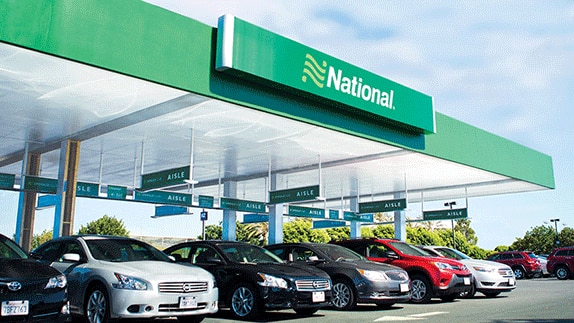
3. National Car Rental
-
Best For: Business Travelers & Speed.
-
The Scoop: If you have to rent from a traditional “Big Three” company, National’s app is the gold standard. Their “Emerald Aisle” service is legendary: You bypass the counter, walk to the lot, pick any car in your row, and drive to the exit gate.
-
2025 Update: The app’s “Virtual Assistant” is surprisingly good at extending your rental with one tap, so you don’t have to call customer service.
-
Expert Hack: Sign up for the free Emerald Club membership before you download the app. You literally cannot use the “skip the counter” feature without it.
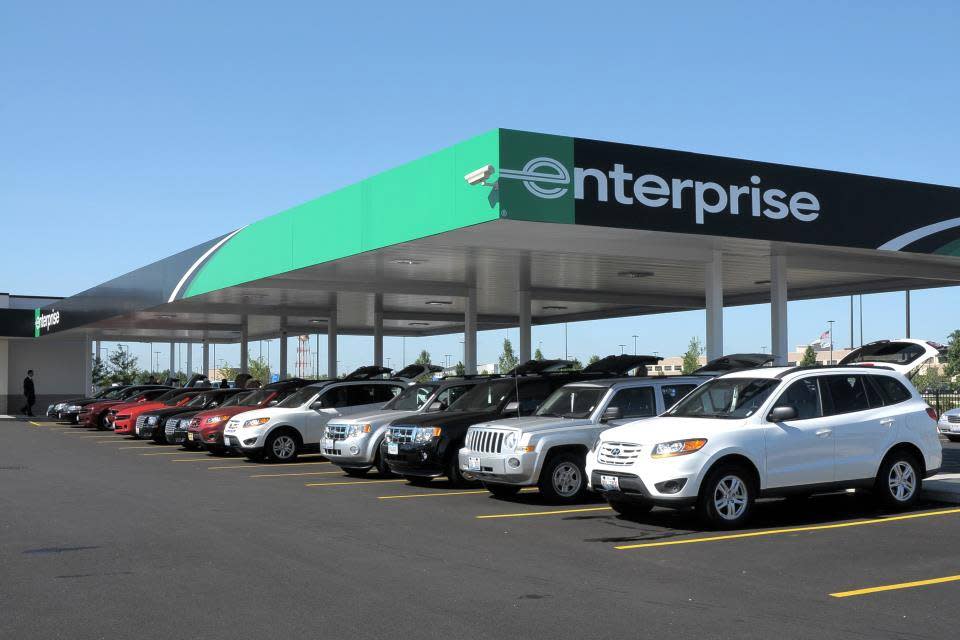
4. Enterprise
-
Best For: Customer Service & Neighborhood Locations.
-
The Scoop: Enterprise has the biggest footprint in the USA. They are everywhere, not just at airports. Their app is clean, functional, and great for one-way rentals (picking up in one city and dropping in another).
-
2025 Update: They have aggressively added hybrids and EVs to their fleet, and the app now has a filter specifically to find them.
-
Expert Hack: Use the app to schedule a “Pick Up.” If you are within a certain radius, they will still come get you (yes, the classic commercial holds true).
5. Priceline
-
Best For: Deep Discounts (The “Gambler’s Choice”).
-
The Scoop: Priceline is an aggregator, meaning it searches everyone else. But the real value here is the “Express Deals”. You can save up to 40% if you agree to book a car without knowing the specific rental agency until after you pay.
-
The “Gotcha”: These deals are non-refundable. If your plans change, you lose the money.
-
Expert Hack: Look at the “User Rating” of the hidden agency. If it’s a 9/10, it’s likely Enterprise or National. If it’s a 6/10, it’s probably a budget brand like Fox or Ace.
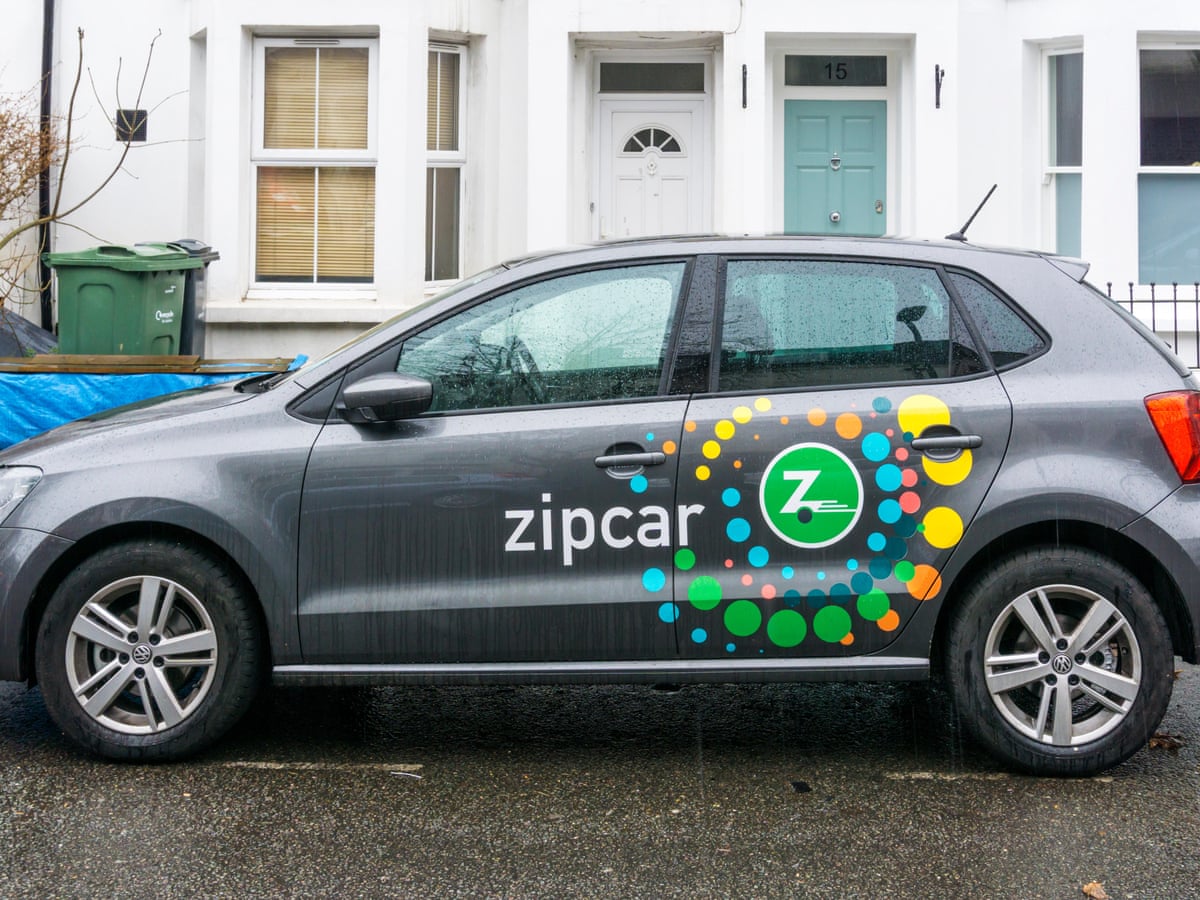
6. Zipcar
-
Best For: City Dwellers & Hourly Rentals.
-
The Scoop: Zipcar is not for road trips; it’s for grocery runs or IKEA trips. You pay a monthly membership, and then book cars by the hour. Gas and insurance are included in the price.
-
2025 Update: They have modernized the fleet. The days of beat-up Honda Civics are gone; you can now find luxury SUVs and electric vehicles in many designated parking spots.
-
Expert Hack: Always inspect the car before you drive and upload photos to the app. Since these cars live on the street, you don’t want to be blamed for the previous driver’s scratch.
7. Expedia
-
Best For: Bundling (Flight + Car).
-
The Scoop: If you haven’t booked your flight yet, do not book your car separately. Expedia’s app allows you to add a car to a flight booking for a “bundled” rate that often makes the car effectively free or dirt cheap.
-
The “Gotcha”: Changing a bundle is a nightmare. Only use this if your plans are 100% stone-set.
-
Expert Hack: Use your “OneKeyCash” (earned from hotels/flights) to pay down the cost of the rental car.
8. Getaround

-
Best For: Contactless Peer-to-Peer (Short term).
-
The Scoop: Similar to Turo, but focused on shorter, instant rentals. Turo is usually for days; Getaround is great for hours. Every car on Getaround has a “Connect” kit, meaning you unlock it with your phone—no meeting the owner for keys.
-
2025 Update: Their dynamic pricing can be volatile. A car that is $10/hour on Tuesday might be $40/hour on Saturday.
-
Expert Hack: Check the mileage limit. Getaround limits are often tighter (e.g., 20 miles per booking hour) compared to Turo’s daily limits.
9. Sixt
-
Best For: Luxury Cars at Mid-Tier Prices.
-
The Scoop: This German company has aggressively expanded in the USA (especially in Florida, California, and New York). They are known for having a fleet full of BMWs, Audis, and Mercedes for the same price Hertz charges for a Ford.
-
The “Gotcha”: They are very strict on damage inspections. Document everything.
-
Expert Hack: Their app often offers “Lucky Dip” cars, where you book a category and might get a massive upgrade upon arrival.
10. AutoSlash

-
Best For: Tracking Price Drops.
-
The Scoop: Okay, technically this is a web-tool-turned-mobile-optimized-experience, but it’s too good to leave off. You don’t “book” here first. You book a refundable rate elsewhere, then plug your reservation number into AutoSlash.
-
The Magic: It tracks your rental every day. If the price drops (which it usually does 2 weeks before the trip), they email you to re-book at the lower rate.
-
Expert Hack: Use this in conjunction with a “Pay Later” reservation from Priceline or Expedia.
The “Insurance” Question in 2025
Before you tap “Book” on any of these apps, read this.
Every app listed above will try to sell you “Collision Damage Waiver” (CDW) for 15−30 a day.
Do you need it?
-
Check your Credit Card: Most premium US travel cards (Chase Sapphire, Amex Platinum, Capital One Venture X) offer Primary Rental Insurance. If you pay with that card, you can decline the app’s insurance.
-
Peer-to-Peer Exception: Note that some credit cards exclude peer-to-peer platforms like Turo and Getaround from coverage. Always read your card’s fine print before declining coverage on Turo.
Final Conclusion:
-
For the coolest road trip: Download Turo.
-
For business speed: Download National.
-
For lazy luxury: Download Kyte.
Drive safely and watch out for speed traps!
Read More